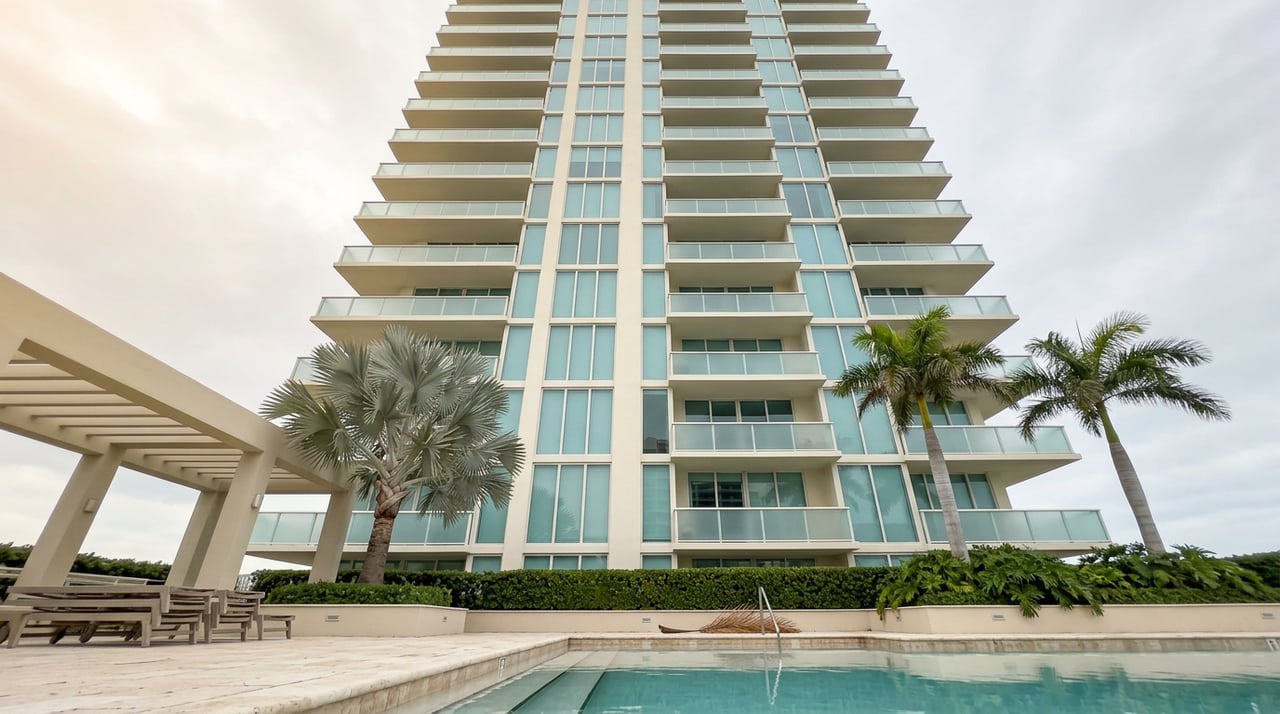
A buyer touring Porsche Design Tower this spring pulls up the building's listings and does the math a lot of shoppers do: check the price per square foot, check how long comparable units have sat on the market, decide whether now is a good time to write an offer. The price side of that math looks strong. The time side looks stalled. In a market where prices are rising, that combination should not exist. In Sunny Isles Beach, it does, and the reason has less to do with demand than with who is actually allowed to finance a purchase here.
The Number That Doesn't Fit the Usual Story
As of Q2 2026, the median sale price for luxury condos in Sunny Isles Beach sat at $1,350,000, up 6.2 percent year over year. Total dollar volume in the city's luxury segment rose 13 percent over the same trailing period. By any conventional reading, that is a market with real momentum.
At the same time, days on market for Sunny Isles Beach luxury condos averaged 135 to 138 days across the fourth quarter of 2025 into the first quarter of 2026, the longest average of any major Miami luxury submarket tracked in that period. Edgewater, for comparison, posted a median of just 65 days in the same window.
Rising prices and lengthening sale times are supposed to pull in opposite directions. When one goes up, the other usually comes down, because a market with genuine excess demand clears faster, not slower. Sunny Isles Beach is doing both at once, and the standard explanation, that buyer interest is cooling, does not survive contact with the dollar volume numbers.
Ruling Out the Easy Answer
If demand were actually softening, dollar volume would be flat or falling alongside the slower sales pace. It is not. Volume is climbing 13 percent while individual transactions take longer to close. That is not a market losing buyers. It is a market where the buyers who remain are moving through the process more deliberately, and the reason comes down to financing eligibility rather than desire.
The Real Bottleneck: Who Can Actually Borrow Here
Miami Realtors reported in April 2026 that just 21 of 2,397 condo buildings across Miami-Dade, Broward, and Palm Beach counties were FHA-approved, roughly 0.9 percent. That single statistic reshapes almost everything else in this market. When a building is not FHA-warrantable, and in many cases not eligible for standard agency financing either, the pool of eligible buyers narrows to cash purchasers and borrowers who qualify for jumbo or portfolio loans.
That narrower pool behaves differently than a typical buyer pool. Cash buyers and jumbo-qualified borrowers are not racing against a financing deadline the way an FHA buyer would be. They can afford to compare more buildings, request more documentation, and wait for the right unit rather than the first available one. Sellers, meanwhile, know exactly how thin that pool is, which gives them less incentive to cut price to speed things up. The result is a market that keeps climbing in price precisely because it is not clearing quickly, not despite it.
What This Looks Like Building by Building
The financing story plays out differently depending on when a tower was built. Pre-2005 buildings, including smaller properties like Ocean Reserve Condominium, tend to carry lower price per square foot but higher exposure to special assessments and reserve funding gaps, both of which make lenders more cautious about warrantability. Buildings from roughly 2010 through 2020 generally carry stronger structural systems, larger amenity decks, and a track record that lenders find easier to underwrite.
At the ultra-luxury tier, buildings like Turnberry Ocean Club, Jade Signature, and the Ritz-Carlton Residences Sunny Isles operate largely outside the financing conversation altogether, since most purchases there are cash from the start. Active resale listings at Porsche Design Tower this spring ranged from $3.7 million to $14.6 million, averaging roughly $1,800 to $2,200 per square foot for oceanfront positions, a price band where financing eligibility matters far less than at the entry point of the luxury segment.
New construction adds another layer. Construction on the 62-story Bentley Residences passed its seventh level by late August 2026, on track to become the city's tallest building, and the dual-tower St. Regis Residences has completed its foundation pour for the south tower with vertical construction now underway. Neither will expand the FHA-eligible pool anytime soon. New towers typically close through cash and portfolio lending in their first years of ownership before they build the sales history that standard agency financing requires, so fresh inventory does not immediately loosen the bottleneck that is shaping today's resale market.
The Line Item Buyers Forget to Ask About
Financing eligibility is not the only place this market rewards extra diligence. Miami-Dade County runs a Condominium Special Assessment Program that offers loans up to $50,000 to help owners cover the cost of special assessments, often tied to the structural and reserve requirements that followed the 2021 Surfside collapse. For a seller carrying an active assessment, that program can shape how a balance gets settled before closing. For a buyer, it is worth asking directly whether an assessment is outstanding and how it is being financed, rather than assuming the number on the listing sheet is the full picture.
Before You Write an Offer
- Ask the listing agent directly whether the building is FHA or conventional-lender warrantable, not simply "financeable." The two are not the same question.
- Request the building's most recent Structural Integrity Reserve Study and milestone inspection report before you submit an offer, not after.
- Confirm whether a special assessment is active or expected, and whether Miami-Dade's assessment loan program applies to the unit or the building.
- Compare price per square foot within the building's own construction era rather than against the citywide median, since a pre-2005 tower and a 2015 tower are not competing for the same buyer pool.
- Build extra time into your contract's financing and inspection contingencies. The same thin buyer pool that slows other offers works in your favor once you can move with certainty.
Comparing Sunny Isles Beach to Other South Florida Options
Anyone shopping Sunny Isles Beach alongside Aventura or Fort Lauderdale should know that each market's friction shows up differently. Aventura's single median price masks two distinct markets split by building age and inspection timelines. Sunny Isles Beach's friction runs through financing eligibility first, then building age second. Neither market is riskier than the other. They simply reward different homework before an offer goes in.
Frequently Asked Questions
Does a 135-day market average mean every Sunny Isles Beach condo takes over four months to sell? No. That figure is an average across the luxury segment. Pricing, building age, and financing eligibility all shift an individual listing's timeline in either direction, sometimes considerably.
Will new towers like Bentley Residences or the St. Regis Residences ease the financing bottleneck once they're finished? Not right away. New construction typically closes through cash or portfolio lending during its early years of ownership before it qualifies for standard agency financing, so it does not quickly expand the FHA-eligible pool that shapes today's resale market.
Is Sunny Isles Beach a cash-only market? Not exactly, but conventional jumbo financing and cash purchases carry most transactions given how few buildings currently qualify for FHA lending.
If you are weighing a purchase in Sunny Isles Beach against another South Florida submarket, the numbers on a listing page only tell part of the story. Elena Beck at Miami Invest Group can walk you through a specific building's financing profile, reserve history, and assessment status before you write an offer. Schedule a Consultation to get started.